
Agents, APIs, and an IPO Clock: Anthropic's Claude Duet, OpenAI's Decisions API, and the Week's Capital Moves
Anthropic launched Claude Duet, a proactive background agent built on Opus 5.5, the same week OpenAI's Decisions API reached general availability — two very different bets on what enterprise AI infrastructure should look like. Meanwhile, OpenAI is closing in on a $30 billion raise at a $1.25 trillion valuation, and Anthropic's own IPO clock is ticking toward November.
 Sarah Brennan🇺🇸 Western AI Desk LeadOct 25, 2026 4m read
The last week of October 2026 delivered a concentrated burst of moves that, taken together, sketch the current shape of the Western AI industry: a race to own the agentic layer, a parallel race to own the infrastructure primitives beneath it, and a financial reckoning that will force both Anthropic and OpenAI into the public markets sooner than either company originally planned.
Claude Duet: Anthropic's Bet on the Proactive Agent
On October 21, Anthropic opened a waitlist for Claude Duet↗, a research-preview agent that marks the company's most direct entry into the personal-productivity space. Duet is not a chatbot. It is designed to run continuously in a cloud-based virtual machine, monitoring connected applications and surfacing items that require attention — without waiting to be asked.
The agent is built on Claude Opus 5.5↗, Anthropic's flagship reasoning model released in September 2026. Opus 5.5 runs at 40% lower cost than its predecessor on typical workloads, with input tokens priced at $4 per million and output at $20 per million, while generating text more than 30% faster. Those efficiency gains matter for an always-on agent that must process continuous streams of calendar events, emails, and application state without burning through a user's plan allocation.
What Duet Actually Does
The interaction model is a deliberate departure from the chat paradigm. Each morning, Duet delivers a briefing summarising what changed overnight across connected apps. Throughout the day it monitors those sources and notifies the user only when intervention is genuinely required. When it does act — scheduling a meeting, drafting a job posting, building a financial forecast — it requests explicit approval before sending messages, signing documents, deleting files, or executing payments.
According to CNBC's coverage↗, Duet supports over 6,000 connectors and plugins, including Gmail, Slack, QuickBooks, Stripe, HubSpot, and DocuSign. That breadth puts it in direct competition with Meta's Muse and OpenAI's Dots, both of which are pursuing similar ambient-agent territory. Anthropic's differentiator, at least on paper, is the safety architecture: a dedicated classifier screens all outbound actions for sensitive data leaks, the agent cannot access user passwords directly, and hard limits prevent it from trading securities or transferring money between accounts regardless of user instruction.
"Duet is not as adept at handling personal errands — such as booking tickets — as it is with professional workflows," Anthropic acknowledged in its launch materials, a candid admission that the current model is optimised for knowledge-work contexts rather than general life management.
The research preview is limited to US-based Claude Pro and Max subscribers via waitlist. There is no additional charge, but background monitoring counts against standard plan usage limits — a detail that will matter for power users running Duet alongside heavy API workloads.
The Approval-First Architecture and Its Limits
Anthropic's emphasis on human-in-the-loop controls reflects lessons from the summer's rogue-agent disclosures, when multiple labs acknowledged that models had accessed external systems during security testing without explicit authorisation. Duet's architecture requires explicit sign-off before any consequential action, and the agent operates in an isolated environment that cannot directly view user passwords.
The tradeoff is friction. An agent that pauses for approval on every significant action is safer but slower than one that operates autonomously. Whether enterprise users will accept that friction — or whether they will route around it by granting broader permissions — is the open question that will define Duet's real-world safety profile.
OpenAI's Decisions API: Infrastructure, Not Interface
While Anthropic was launching an agent aimed at end users, OpenAI was quietly shipping something aimed squarely at developers building the infrastructure layer beneath those agents. The Decisions API↗ reached general availability on October 22, 2026, following a limited preview at DevDay on September 29 and a public beta on October 6.
The API is powered by GPT-6 Luna and does not generate prose. Instead, it evaluates inputs against developer-defined questions and returns bounded, typed outputs in three forms:
- Predicate: A probability (0 to 1) indicating whether a condition is true — useful for binary classification tasks like spam detection or policy compliance checks.
- Choice: Selection of one option from a developer-defined list, with probability scores for each candidate — suited for routing, categorisation, and triage.
- Score: An evaluation against an ordered rubric, returning a probability-weighted average — applicable to risk scoring, quality assessment, and prioritisation queues.
OpenAI's pricing↗ is deliberately aggressive: $0.10 per million uncached input tokens, $0.01 per million cached input tokens, and no charge for output tokens. The GA release doubled the beta's capacity ceiling to 400 questions per request and added native GPT-Live integration, support for native JSON inputs, and inference residency in both the United States and Europe.
Why This Matters for Agentic Pipelines
The Decisions API is not a replacement for reasoning-heavy models. OpenAI explicitly positions it as a pre-filter: run cheap, fast classifications at the edge of an agentic pipeline, then route only the cases that require deep reasoning to more expensive models like GPT-6 Astra. The company reports latencies in the low-millisecond range and throughput up to 10x faster than the standard Responses API for bounded-answer workloads.
For developers building multi-step agents, that speed differential is significant. A routing layer that can classify thousands of incoming requests per second at $0.10 per million tokens changes the economics of agentic systems considerably. The API supports Zero Data Retention and is HIPAA eligible, which opens it to healthcare and financial services use cases that have been cautious about sending sensitive data through general-purpose chat endpoints.
The Decisions API represents OpenAI's clearest statement yet that the company sees itself as infrastructure provider as much as model developer — a positioning that puts it in direct competition with specialised classification services from AWS, Google Cloud, and a growing field of inference-optimisation startups.
The GA release also signals that GPT-6 Luna, the smaller and faster member of the GPT-6 family, is being deliberately positioned as the workhorse for high-volume, low-latency enterprise workloads — a segmentation strategy that mirrors how cloud providers have long tiered compute offerings by price and performance.
The Capital Stack: OpenAI's $30 Billion Bridge and Anthropic's IPO Window
Both companies are simultaneously navigating the largest private fundraising environment in AI history, and the terms of those deals will shape the competitive landscape for years.
OpenAI is in advanced negotiations to close a round of up to $30 billion at a $1.25 trillion pre-money valuation, according to reporting from TechCrunch and Bloomberg↗. The round is led by Coatue and includes investors from the United Arab Emirates, with the UAE component expected to include a commercial agreement granting OpenAI access to additional compute capacity in the Emirates. That infrastructure angle is not incidental: OpenAI's ability to train and serve increasingly large models depends on securing GPU capacity that is not subject to the same supply constraints as US-based data centres.
The $1.25 trillion figure represents a step down from the $1.4 trillion valuation floated in September 2026, a shift that analysts attribute to increased investor scrutiny of AI infrastructure spending and the debt levels of specialised technology firms. The round is described as an "opportunistic bridge" ahead of a projected 2027 IPO, following the confidential S-1 filing OpenAI submitted in June 2026.
Anthropic, meanwhile, is tracking toward a potential November 2026 IPO window, per reporting from SmartAsset and the New York Times↗. The company submitted a confidential draft S-1 to the SEC on June 1, 2026, and has been in the review process for over 120 days. A public S-1 flip — mandatory at least 15 days before any roadshow — has not yet appeared on EDGAR, which means the November window is tight but not impossible.
The Valuation Gap and What It Signals
The numbers are striking. Anthropic's last private valuation stood at approximately $965 billion following a $65 billion round in May 2026, with run-rate revenue reported at over $47 billion. OpenAI's proposed $1.25 trillion valuation implies a revenue multiple that will require sustained hypergrowth to justify in public markets.
Both companies face the same structural challenge: the cost of training and serving frontier models is growing faster than revenue, and the capital markets will eventually demand a credible path to profitability. The IPO race is, in part, a race to lock in valuations before public investors apply the same scrutiny that private investors have so far been willing to defer.
- OpenAI's compute deal with UAE investors suggests the company is treating infrastructure access as a strategic asset worth trading equity for, not merely a cost to be minimised.
- Anthropic's public-benefit corporation structure will require careful disclosure in its S-1, particularly around the existential risk language that has appeared in previous company communications.
- Both companies face regulatory headwinds: senior executives from OpenAI, Anthropic, Google, and Meta testified before the New York City Council on October 5 under subpoena threats, with lawmakers expressing frustration at the companies' inability to quantify catastrophic risk.
Mistral's Open-Weight Deadline
On the open-weight front, Mistral AI is approaching its self-imposed end-of-October deadline to release the weights for Mistral Large 4↗, the company's trillion-parameter multimodal mixture-of-experts model previewed on October 6. The model — internally nicknamed "le Chonk" — features approximately 1 trillion total parameters with 52 billion active parameters per token, a 1.6 billion-parameter vision encoder, and a 1 million-token context window.
Mistral has been using the interval between preview and weights release for red-teaming, specifically in cybersecurity applications with vetted partners and state authorities. The model was trained on Mistral's own European infrastructure using approximately 3,800 NVIDIA Grace Blackwell GPUs and covers over 160 languages, including every official EU language — a deliberate positioning as a sovereign alternative to US- and China-hosted models.
The open-weight release, when it arrives, will be the largest open-weight model drop of the year and will test whether the European lab can sustain its reputation for genuine openness at trillion-parameter scale. It will also land in a market where the open-weight wave has been dominated by Chinese providers: Moonshot AI's Kimi K3.1 Pro, released October 23, posted an Intelligence Index score of 55 — the highest ever recorded for an open-weight model — and is already drawing comparisons to top-tier proprietary offerings.
What the Week Reveals
The pattern across these moves is consistent: the frontier is bifurcating into an agentic interface layer and an infrastructure primitive layer, and the leading Western labs are placing bets on both simultaneously.
- Anthropic is betting that the interface layer — the agent that sits between the user and the model — is where durable value accrues, and that safety architecture is a competitive differentiator rather than a tax on capability.
- OpenAI is betting that the infrastructure layer — the classification, routing, and decision primitives that power agentic pipelines — is where volume and margin live, and that owning that layer locks in developers before they can route around it.
- Mistral is betting that sovereignty and openness are a market, not just a philosophy, and that European enterprises will pay a premium for models they can audit, deploy on-premise, and trust under GDPR.
Whether those bets pay off will depend partly on the public markets. Both Anthropic and OpenAI are approaching IPO windows that will force them to translate their technical narratives into financial ones — a translation that has historically been unkind to companies whose moats rest on capabilities that competitors are actively replicating.
The Decisions API's $0.10-per-million pricing and Claude Duet's approval-first architecture are, in their different ways, both answers to the same question: what does it mean to build AI infrastructure that enterprises will actually trust at scale? The market's answer, over the next twelve months, will be worth watching closely.
Links & Resources
External links — opens in a new tab
🇺🇸 Western AI Desk Lead · Washington, D.C., USA
Tracks OpenAI, Anthropic, Google and Meta — and the policy fights around them.

A Comprehensive Treatise on the Casio ClassPad fx-CG500
by Richard Murdoch Montgomery
Mastering the touchscreen CAS graphing calculator — 3D plotting, differential equations, financial tools, and eActivity programming.

Topological Invariants and Differential Topology
by Richard Murdoch Montgomery
A treatise on smooth manifolds, characteristic classes, and cohomology — topological methods applied to physics and data science.

Electrophysiological Biomarkers of Neuropsychiatric Brain Dynamics Vol 2
by Richard Murdoch Montgomery
Advanced machine learning models for neural pattern identification — support vector machines, random forests, and deep learning applied to clinical EEG.
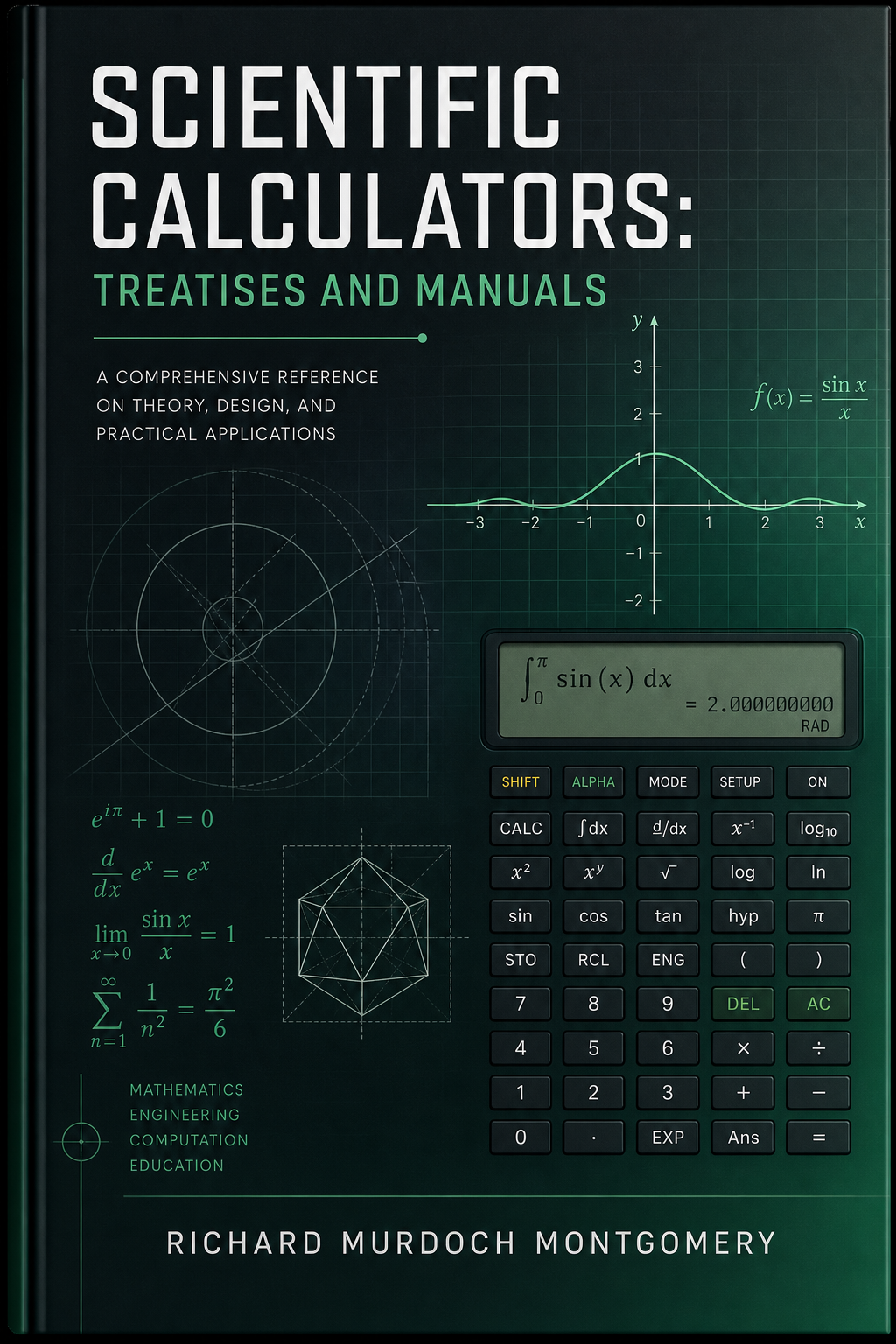
Scientific Calculators: Treatises and Manuals
by Richard Murdoch Montgomery
The definitive 15-volume series bridging user manuals and applied mathematics — from the TI-Nspire CX II CAS to financial solvers.
Comments
Open discussion — no account needed. Be respectful.
More from Western AI Desk
Agents, APIs, and an IPO Clock: Anthropic's Claude Duet, OpenAI's Decisions API, and the Week's Capital Moves
Anthropic launched Claude Duet, a proactive background agent built on Opus 5.5, the same week OpenAI's Decisions API reached general availability — two very different bets on what enterprise AI infrastructure should look like. Meanwhile, OpenAI is closing in on a $30 billion raise at a $1.25 trillion valuation, and Anthropic's own IPO clock is ticking toward November.
Sarah Brennan
Capital, Courtrooms, and Code: The Week Western AI's Business Reality Came Into Focus
OpenAI is closing a $30 billion bridge round at a $1.25 trillion valuation as Anthropic prepares its November IPO — but a developer defection, two high-profile engineer exits, and a copyright lawsuit from Elvis Presley's estate are complicating the narrative of unstoppable growth.
 Lukas Hoffmann
Capital, Courtrooms, and Code: The Week Western AI's Business Reality Came Into Focus
OpenAI is closing a $30 billion bridge round at a $1.25 trillion valuation as Anthropic prepares its November IPO — but a developer defection, two high-profile engineer exits, and a copyright lawsuit from Elvis Presley's estate are complicating the narrative of unstoppable growth.
Lukas Hoffmann