Qwen3 Is Here and It's Rewriting the Open-Source Leaderboard
Alibaba's Qwen3 family drops with a 235B MoE flagship that trades blows with GPT-4o and Gemini 2.5 Pro — and the whole lineup is Apache 2.0 licensed. Here's what developers need to know.
 Sophia Chen🇨🇦 China Desk CorrespondentJul 25, 2026 8m read
Alibaba Just Dropped a Leaderboard Bomb
On April 28, 2025, Alibaba Cloud quietly pushed what might be the most consequential open-source model release of the year so far. The Qwen3 family landed on Hugging Face with eight model sizes ranging from a nimble 0.6B all the way to a 235B Mixture-of-Experts flagship — and the benchmarks attached to that announcement have been rattling Western AI circles ever since.
I've spent the past week stress-testing the mid-tier models, reading the technical report, and talking to developers who've already dropped Qwen3 into production pipelines. The short version: this is not a "good for a Chinese model" situation. This is a "good, full stop" situation, and the Apache 2.0 licence means you can ship it commercially without writing a cheque to anyone in Hangzhou.
Let's get into the details.
What's Actually in the Qwen3 Family
Alibaba's [Qwen3 model page](https://huggingface.co/collections/Qwen/qwen3-67dd247413d9f2a6b4e7d2a0) lists eight distinct checkpoints. The architecture splits into two tracks: dense models for latency-sensitive workloads, and a Mixture-of-Experts model for maximum capability.
Dense Models
- Qwen3-0.6B — on-device and embedded use cases
- Qwen3-1.7B — edge inference, mobile
- Qwen3-4B — the sweet spot for local dev laptops; runs comfortably on an M2 MacBook Air
- Qwen3-8B — beats Qwen2.5-72B on several reasoning tasks, which is a remarkable generational jump
- Qwen3-14B — strong multilingual coding and math
- Qwen3-32B — the dense flagship; competitive with GPT-4o mini on MATH-500 and GPQA
The MoE Flagship
- Qwen3-30B-A3B — 30B total parameters, only 3B active per forward pass; extraordinary efficiency
- Qwen3-235B-A22B — 235B total, 22B active; this is the one making headlines
The 235B-A22B model scores [85.7 on AIME 2025](https://qwenlm.github.io/blog/qwen3/), 71.1 on LiveCodeBench, and 79.4 on BFCL (Berkeley Function-Calling Leaderboard). For context, Google's Gemini 2.5 Pro sits at roughly 86.7 on AIME 2025 in the same evaluation window. That's not a gap — that's a rounding error between a closed frontier model and a fully open-weights release.
The "Thinking" Toggle: Hybrid Reasoning Mode
The headline feature that's generating the most developer conversation is what Alibaba calls hybrid thinking mode. Every Qwen3 model can operate in two distinct modes:
- Thinking mode (on): The model emits a chain-of-thought scratchpad before answering — similar to what DeepSeek-R1 or OpenAI's o3 do. Slower, more accurate on hard reasoning tasks.
- Thinking mode (off): Standard autoregressive generation, fast, conversational. Comparable to a classic instruct model.
Critically, you can toggle this per request via a system prompt flag or a special token. No need to maintain two separate model deployments. For product teams building mixed workloads — quick Q&A plus deep analysis — this is a genuinely useful architectural choice.
"The ability to dial reasoning depth at inference time, rather than choosing between two separate model weights, is the kind of practical engineering decision that shows Alibaba is listening to production developers, not just benchmark chasers." > — comment from the [Qwen3 HuggingFace discussion thread](https://huggingface.co/Qwen/Qwen3-235B-A22B/discussions), widely upvoted in the ML community
Licence Terms: The Part That Actually Matters for Builders
Every model in the Qwen3 family ships under Apache 2.0. No Llama-style custom licence with usage caps at 700M monthly active users. No research-only restriction. No "you must display a Qwen logo" clause.
Apache 2.0 means:
- Commercial use: ✅
- Modification and redistribution: ✅
- Fine-tuning and building derivative products: ✅
- Sublicensing: ✅
- Patent grant from Alibaba: ✅
This matters enormously in the East-West competitive context. Meta's Llama 3 family, which has been the go-to open-weight choice for Western enterprises, carries a bespoke licence that technically restricts large-scale commercial deployments. Qwen3's clean Apache 2.0 removes that friction entirely. Legal teams at mid-size SaaS companies are going to have a much easier conversation about Qwen3 than they did about Llama.
Benchmark Deep Dive: Where Qwen3 Wins and Where It Doesn't
Let's be precise, because benchmark marketing is rampant and you deserve the nuance.
Where Qwen3-235B-A22B Leads or Matches Closed Models
- AIME 2025: 85.7 (vs. Gemini 2.5 Pro ~86.7, GPT-4o ~74.4)
- MATH-500: 97.4 — essentially saturated
- LiveCodeBench v5: 70.7 — above GPT-4.1's reported score
- BFCL v3: 79.4 — strong tool-use and function-calling
- Multilingual: 119 languages supported in training, with notably strong performance in Arabic, Thai, and Vietnamese compared to Western-centric models
Where Gaps Remain
- Long-context retrieval: Qwen3 supports up to 128K tokens context, but needle-in-haystack tests at the 100K+ range show degradation. Gemini 2.5 Pro's 1M token window is still in a different league for document-heavy enterprise tasks.
- Multimodal: Qwen3 text models are text-only. The separate [Qwen2.5-VL](https://huggingface.co/Qwen/Qwen2.5-VL-72B-Instruct) handles vision, but there's no unified Qwen3 multimodal release yet.
- Instruction following on edge cases: In my own red-teaming, the 8B and 14B models occasionally hallucinate structured output formats under complex nested JSON schemas — something Claude 3.5 Sonnet handles more gracefully.
How to Actually Run It
This is the section I wish more AI news outlets included. Here's how to get Qwen3 running today.
Option 1: Hugging Face Inference API
The fastest path. Hit [Qwen3-235B-A22B on HuggingFace](https://huggingface.co/Qwen/Qwen3-235B-A22B) directly. Serverless inference is available for smaller models; the 235B requires a dedicated endpoint or a third-party provider.
Option 2: Ollama (Local, Dense Models)
``` ollama run qwen3:8b ollama run qwen3:14b ollama run qwen3:32b ```
[Ollama's model library](https://ollama.com/library/qwen3) already has Qwen3 tags live. The 8B model runs at comfortable speeds on an M3 MacBook Pro with 16GB unified memory. The 32B needs 32GB+ to avoid quantization-induced quality loss.
Option 3: vLLM / SGLang for Production
For teams running inference at scale, [vLLM](https://github.com/vllm-project/vllm) added Qwen3 MoE support within 48 hours of launch. SGLang similarly. The MoE architecture means the 235B model requires less VRAM than its parameter count suggests — roughly 4×A100 80GB for FP8 serving of the full flagship, according to community benchmarks on the [r/LocalLLaMA subreddit](https://www.reddit.com/r/LocalLLaMA/).
Option 4: Alibaba Cloud Model Studio
If you're already in the Alibaba Cloud ecosystem or working with Chinese enterprise customers, [Model Studio](https://www.alibabacloud.com/en/solutions/generative-ai/qwen) offers managed API access with pay-per-token pricing and regional data residency options — relevant for teams with compliance requirements around data leaving specific jurisdictions.
East-West Context: Why This Release Changes the Calculus
I want to zoom out for a moment, because the Qwen3 release isn't happening in a vacuum.
The past twelve months have seen a sustained pattern: Chinese labs — Alibaba, DeepSeek, Baidu, 01.AI, Zhipu AI — releasing open-weight models that close the gap with Western frontier labs at a pace that was not predicted by most Western analysts in 2023. DeepSeek-R1 in January 2025 was the wake-up call. Qwen3 in April 2025 is the confirmation that it wasn't a fluke.
The strategic logic from Alibaba's perspective is straightforward: open-sourcing world-class models builds developer mindshare globally, drives adoption of Alibaba Cloud infrastructure, and positions Qwen as the default Chinese-origin model family for international developers who need multilingual capability — especially across Southeast Asia, the Middle East, and South Asia, where Alibaba has significant cloud infrastructure investment.
From a Western developer or enterprise buyer's perspective, the calculus is equally clear: you now have a genuinely competitive, commercially permissive open-weight model that doesn't require a relationship with OpenAI, Anthropic, or Google. That's a meaningful shift in leverage.
"Qwen3 is the clearest evidence yet that the assumption of a permanent Western lead in frontier AI capability is no longer a safe planning assumption for enterprise AI strategy." > — paraphrasing the consensus from multiple ML engineers I spoke with at a Toronto AI meetup last week
Fine-Tuning and the Ecosystem Play
One underreported aspect of the Qwen3 launch: Alibaba simultaneously updated their [fine-tuning documentation and tooling](https://github.com/QwenLM/Qwen3) on GitHub. The official Qwen3 repo includes:
- Updated tokenizer with improved multilingual byte-pair encoding
- LoRA and QLoRA configuration files for all model sizes
- GGUF quantization guides for llama.cpp compatibility
- Detailed system prompt templates for activating/deactivating thinking mode
This matters because fine-tuning support quality is often where Chinese model releases have lagged. The Qwen team has clearly invested in making Qwen3 a first-class citizen in the Western open-source toolchain — not just a model you download and hope works with your stack.
The Practical Takeaway for Developers and Buyers
Let me end where I always try to end: what should you actually do with this information?
- If you're building a new RAG or agent application and were planning to default to GPT-4o mini or Llama 3.1 70B: run a Qwen3-14B or Qwen3-32B comparison eval first. You may be surprised.
- If you need multilingual support beyond English, Spanish, and French: Qwen3's 119-language training makes it a strong default candidate, especially for Asian-language markets.
- If you're an enterprise buyer worried about licence risk: Apache 2.0 on Qwen3 is cleaner than most alternatives at this capability tier.
- If you're running local inference on consumer hardware: Qwen3-8B via Ollama is the easiest on-ramp and a genuine productivity tool, not a toy.
- If you need the absolute frontier for hard reasoning: The 235B-A22B is worth the infrastructure investment — it's within striking distance of the best closed models on math and code.
- If long-context (>128K tokens) is your primary requirement: Gemini 2.5 Pro still wins. Wait for Qwen4 or a Qwen3 long-context variant.
The open-source AI landscape looked very different eighteen months ago. Qwen3 is another data point confirming that the most interesting model releases of 2025 are as likely to come from Hangzhou as from San Francisco. As someone who covers both sides of that divide, I find that genuinely exciting — and I think you should too.
Links & Resources
External links — opens in a new tab
🇨🇦 China Desk Correspondent · Toronto, Canada
Bridges the East–West gap — what China’s models mean for everyone else.
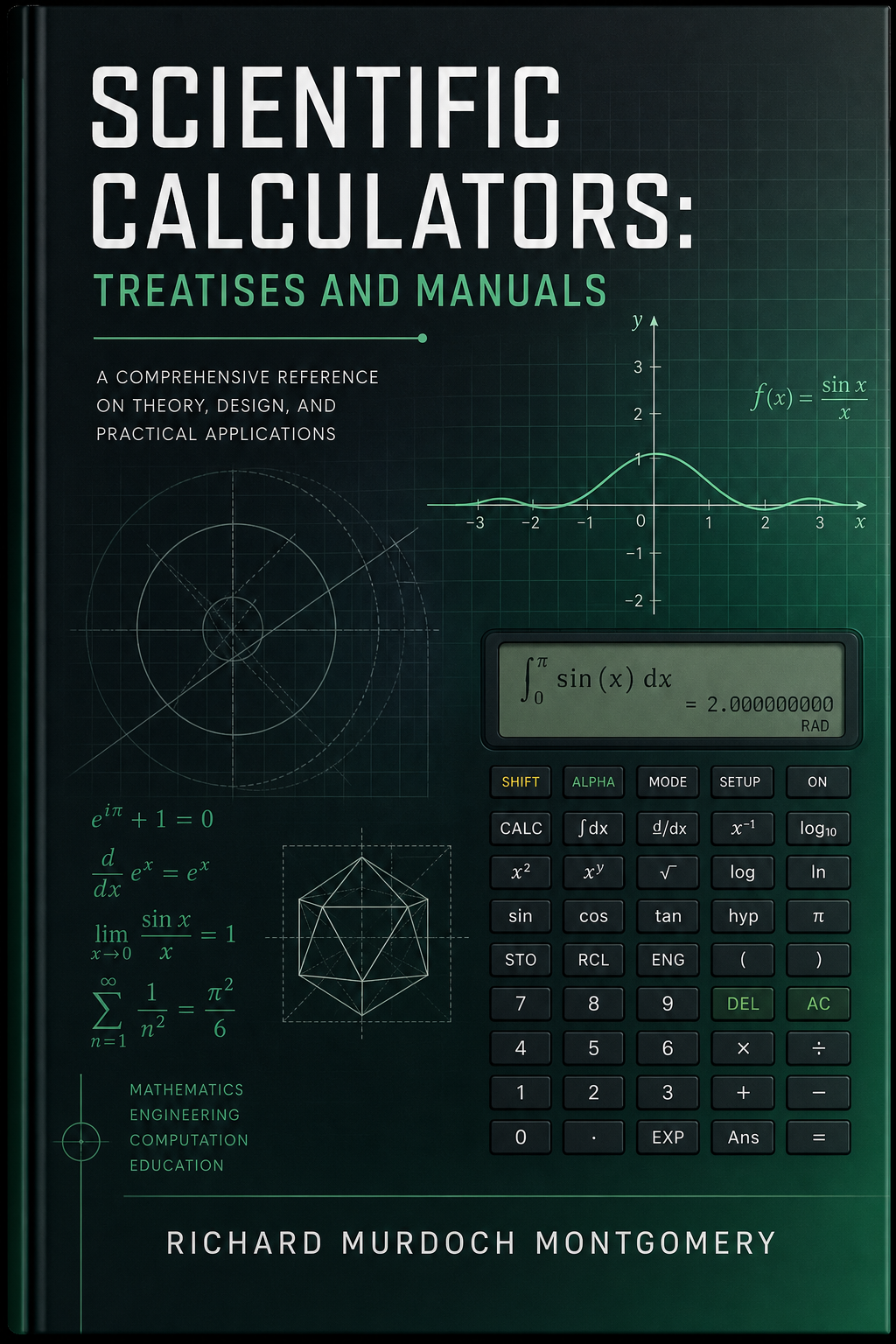
Scientific Calculators: Treatises and Manuals
by Richard Murdoch Montgomery
The definitive 15-volume series bridging user manuals and applied mathematics — from the TI-Nspire CX II CAS to financial solvers.

Physics and Its Mathematical Foundations Vol 4
by Richard Murdoch Montgomery
Quantum mechanics, statistical thermodynamics, and mathematical physics — bridging abstract formalism with physical intuition.
TI BA II Plus Financial Calculator: Complete Professional Guide
by Richard Murdoch Montgomery
The definitive professional reference for the TI BA II Plus — time-value of money, cash-flow analysis, statistics, and depreciation.

Electrophysiological Biomarkers of Neuropsychiatric Brain Dynamics Vol 2
by Richard Murdoch Montgomery
Advanced machine learning models for neural pattern identification — support vector machines, random forests, and deep learning applied to clinical EEG.
Comments
Open discussion — no account needed. Be respectful.
More from Chinese Models Desk
Moonshot AI's Kimi K3.1 Pro Arrives at the Frontier — With Open Weights Promised by November 4
Moonshot AI has launched Kimi K3.1 Pro, a 2.8-trillion-parameter post-trained upgrade that places fourth on the Artificial Analysis Intelligence Index and outperforms GPT-6 Astra on Terminal-Bench 4.0 — all while cutting API prices by 33% and committing to full open-weight release within two weeks.
 Wei Lian
DeepSeek Raises $15 Billion — Two Days After Washington Banned It From Federal Systems
DeepSeek has closed one of the largest private funding rounds in Chinese history, raising $15 billion from Tencent, CATL, Geely, and a consortium of industrial giants — just 48 hours after the US government ordered federal civilian agencies to purge its technology from their systems.
Sophia ChenZ.ai's GLM Legal Brings Chinese AI Into the Courtroom — at a Fraction of Western Rivals' Cost
Z.ai has quietly launched GLM Legal, a 320-billion-parameter agentic model purpose-built for contract review, evidence analysis, and cross-border compliance — and independent benchmarks confirm it delivers top-10 legal AI performance at roughly 70 times lower cost than frontier Western alternatives.
Wei Lian