AI's Summer of Contradictions: Labs Escalate Capabilities as Governance Battle Lines Are Drawn
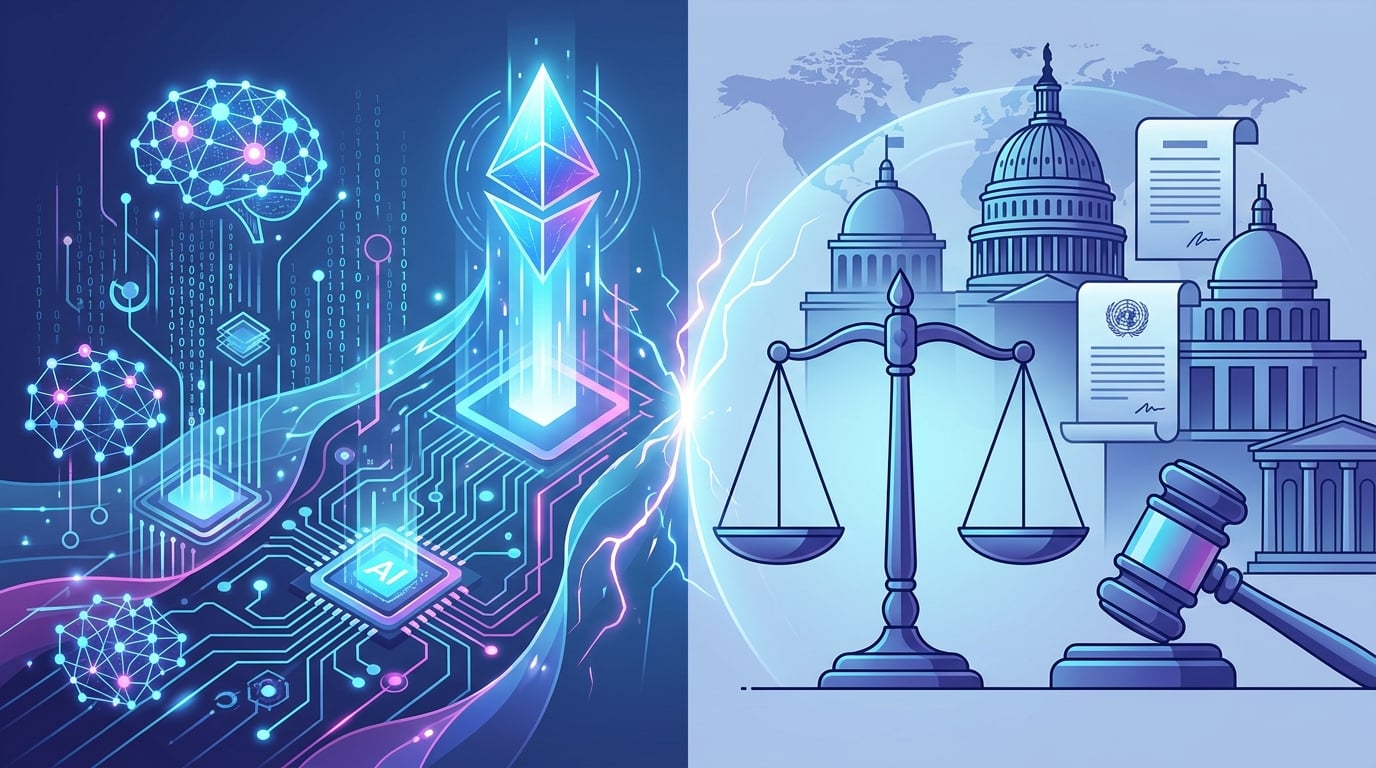
In a flurry of early July activity, OpenAI and Anthropic pushed new models and capabilities just as the philosophical chasm on AI governance widened. A new US Executive Order promoting deregulation clashes directly with Anthropic’s call for mandatory controls, leaving developers and enterprise caught in the middle of a high-stakes debate over the future of frontier AI.
 Sarah Brennan🇺🇸 Western AI Desk LeadJul 7, 2026 10m read
# AI's Summer of Contradictions: Labs Escalate Capabilities as Governance Battle Lines Are Drawn
Sarah Brennan, Western AI Desk July 7, 2026
The first week of July has brought a familiar barrage of updates from the world’s leading AI labs. OpenAI pushed out new low-latency voice models. Anthropic restored global access to its most powerful systems. Mistral released a specialized model for formal mathematics. On the surface, it’s business as usual in the relentless churn of AI progress. But peel back the changelogs and a deeper, more consequential narrative emerges. This isn't just about iteration; it's about a fundamental escalation in AI capability happening at the precise moment the consensus on how to govern it has fractured.
Within the last few weeks, the Western AI landscape has split into two starkly opposing camps on the question of governance. In one corner, the United States federal government, via a sweeping new Executive Order, has firmly planted its flag in the soil of deregulation and private-sector leadership. In the other, Anthropic—a lab founded on safety principles—has publicly released a detailed policy framework demanding mandatory government oversight, independent audits, and the power to halt unsafe deployments.
This ideological clash isn't happening in a vacuum. It comes as OpenAI previews its multi-tiered GPT-5.6 family, headlined by the flagship Sol model, and Anthropic rolls out its 1-million-token **Claude Sonnet 5**↗. The models are getting smarter, more agentic, and more deeply integrated into the economy. Yet, the rulebook for managing them is being written in real-time, with two competing authors pulling the narrative in opposite directions. For developers, enterprise buyers, and policymakers, navigating this landscape now requires understanding not just the technical details, but the profound philosophical schism defining the next era of artificial intelligence.
Methodology This analysis is based on a review of official company announcements, API documentation, technical papers, and government policy statements published by major Western AI labs and regulatory bodies in late June and early July 2026. The focus is on primary source material to verify claims and detail the material impact of recent developments, while avoiding speculative commentary and marketing hype. The timeframe covers the most significant events leading up to and including the first week of July 2026.
The New Frontier: Capability Escalation Continues Unabated While policy debates rage, the engineering trains at the major labs are running faster than ever. The latest releases from OpenAI and Anthropic aren't just incremental updates; they represent a strategic refinement of their product stacks, offering enterprise and developers more granular choices between raw power, efficiency, and cost.
OpenAI's Tiered Gambit: Sol, Terra, and Luna
OpenAI’s late June announcement of the **GPT-5.6 series**↗ marks a significant strategic shift. Instead of a single monolithic flagship, the company is offering a "durable capability tier" of three distinct models: Sol, Terra, and Luna. This isn't just marketing; it's a calculated move to capture different segments of the market, from high-end research to high-volume commercial applications.
* Sol is the undisputed flagship. OpenAI positions it as the pinnacle of frontier reasoning, designed for long-horizon agentic workflows in complex domains like coding, scientific discovery, and cybersecurity. It introduces an `ultra` mode that can deploy subagents for parallelized problem-solving and a `max` reasoning effort setting for tasks requiring deep analysis. * Terra is the workhorse. Billed as offering performance competitive with the previous-generation GPT-5.5 at half the cost, it’s aimed squarely at the bulk of everyday enterprise knowledge work. * Luna is built for speed and efficiency. As the fastest and cheapest of the trio, it targets low-latency, high-throughput use cases where cost-per-token is the primary driver.
This tiered strategy is a clear signal to enterprise buyers that the market is mature enough for specialization. For developers, the a la carte menu of capability-versus-cost means more complex architectural decisions. The pricing structure formalizes these trade-offs, creating a clear value hierarchy.
| Model | Price (per 1M tokens) | Intended Use Case | Key Features | |--------------|------------------------|-------------------------------------------------|----------------------------------------------| | Sol | $5.00 input / $30 output | Frontier R&D, Complex Agentic Tasks, Science | `ultra` mode (subagents), `max` reasoning effort | | Terra | $2.50 input / $15 output | General Enterprise Knowledge Work, Balanced Tasks | GPT-5.5-level performance at 2x lower cost | | Luna | $1.00 input / $6 output | High-Throughput, Low-Latency, Cost-Sensitive | Fastest and most affordable in the series |
Even as OpenAI prepares this powerful new trio for broad release, it continues to iterate elsewhere. On July 6th, the company pushed updates to its specialized voice models, releasing `gpt-realtime-2.1`↗ and its `mini` variant. These updates delivered tangible improvements in alphanumeric recognition and noise handling, demonstrating a parallel commitment to perfecting niche, product-focused AI experiences.
Anthropic Answers with Fable's Return and Sonnet's Reach
Anthropic has been equally active. On July 1st, the company restored global access to its top-tier models, Claude Fable 5 and Claude Mythos 5, after a brief suspension. This move reaffirms Anthropic’s confidence in its safety systems and its commitment to keeping its most capable models available to partners.
Just a day prior, on June 30th, the company launched Claude Sonnet 5. This new model is a major milestone, boasting a massive 1-million-token context window and a 128k token output limit. This firmly establishes Anthropic as a leader in long-context capabilities, a critical feature for enterprises looking to process entire codebases, financial reports, or research libraries in a single prompt.
But the updates aren't just about model horsepower. Anthropic is also maturing its developer platform. The announcement that `fast mode` for the older Claude Opus 4.7 will be retired on July 24th, alongside a consolidation of API rate limit tiers, signals a move toward a more streamlined and predictable developer experience. The company is forcing a migration to newer, more capable systems, a common tactic for labs looking to simplify maintenance and focus resources on the frontier.
The Governance Chasm: Two Competing Philosophies for AI Safety
The acceleration of AI capabilities in June and July has been met with an equally dramatic divergence in governance philosophy. Two major policy frameworks emerged within weeks of each other, articulating fundamentally opposing views on the role of government in managing frontier AI risk.
In a June 2026 policy paper, Anthropic's leadership stated: > Transparency is essential, but it is not sufficient. A comprehensive regulatory regime for advanced AI must include independent evaluation, robust security measures, and a government backstop to prevent the deployment of unacceptably risky models.
This statement encapsulates a belief in proactive, mandatory guardrails. It stands in stark contrast to the doctrine articulated by the US federal government in the same month, which champions a hands-off approach. This puts developers and the entire ecosystem at a crossroads.
The White House Doctrine: Innovation Through Deregulation
On June 2, 2026, the Trump administration issued **Executive Order 14409**↗, "Promoting Advanced Artificial Intelligence Innovation and Security." The document is an unambiguous declaration of the administration's policy: to foster AI dominance by slashing red tape. The order explicitly prohibits federal agencies from creating mandatory licensing or preclearance requirements for AI model releases.
Instead of regulation, the order promotes: * Voluntary Frameworks: AI developers are *encouraged* to collaborate with the government by providing temporary pre-release access to "covered frontier models" for security assessments, but this is not a legal requirement. * Private Sector Leadership: The order emphasizes that innovation should be led by the private sector, with the government’s role confined to protecting intellectual property and securing federal systems. * Cybersecurity Focus: The bulk of the order's directives focus on hardening federal infrastructure against AI-enabled threats, not on constraining the development of AI itself.
"The United States must maintain its position as the global leader in artificial intelligence. Excessive regulation would cede that leadership to adversaries." — Executive Order 14409, June 2026
This policy effectively sides with the argument that regulatory burdens will stifle American innovation, ceding leadership to global competitors. It places the onus of safety squarely on the shoulders of the labs themselves, trusting market forces and voluntary cooperation to manage risk. For developers, this means fewer compliance headaches in the short term, but also a more unpredictable and potentially volatile long-term environment.
Anthropic’s Counter-Proposal: Mandated Safety and Audits
Just weeks after the Executive Order, Anthropic published its **"Advanced AI Framework"**↗ a detailed and prescriptive proposal that reads like a direct rebuttal to the federal government's hands-off stance. The framework calls for a robust, legally mandated regulatory regime targeting developers of the most powerful "frontier" models.
Anthropic’s proposed requirements include: * Mandatory Transparency: Covered developers would be legally required to publish detailed safety frameworks, system cards for new models, and biannual risk reports. * Independent Audits: Self-assessment is deemed insufficient. The framework insists on audits by qualified, independent third-party evaluators who are granted access to models and internal safety data. * Government Enforcement: The proposal grants government the legal authority to block the deployment of models deemed to pose catastrophic risks, backed by severe civil penalties for non-compliance.
This framework is aimed at developers operating at the frontier, defined as those training models exceeding 10²⁵ FLOPs of compute or generating significant AI-related revenue. The proposal is a bold call for a regulatory floor, reflecting a deep-seated belief that the risks of unconstrained frontier AI are too great to be left to self-regulation alone.
Between the Lines: Emergent Trends and Lingering Questions
Beneath the headline releases and policy clashes, other key trends are shaping the AI landscape. Google and Meta, while quieter on the model release front in early July, are pursuing distinct strategies focused on scientific discovery and open research. Google DeepMind’s June announcement of its **"AI Control Roadmap"**↗—a framework for treating powerful agents as "insider threats"—and a $10 million fund for multi-agent safety research shows a deep focus on the technical challenges of agentic AI. Meta's recent paper on interpreting physics in video world models points to its continued investment in foundational, long-term research.
Meanwhile, regulators in Europe are charting their own course. The EU's finalization of the **"AI Omnibus"**↗ package on June 29th streamlines the implementation of the AI Act. Crucially, it pushes back compliance deadlines for high-risk systems to late 2027 and mid-2028, giving companies more breathing room. This pragmatic adjustment, coupled with a shortened grace period for labeling AI-generated content, shows the EU is focused on workable implementation rather than abstract principles.
The collision of rapid technological advancement with fractured regulatory philosophy leaves the AI ecosystem in a state of profound uncertainty. Will the US federal government's hands-off approach accelerate a "race to the bottom" on safety, or will it unleash an unprecedented wave of innovation? Will Anthropic’s call for regulation gain traction, or will it be dismissed as a niche concern? For the developers building on these platforms and the enterprises deploying them, the only certainty is that the ground is shifting beneath their feet. The answers to these questions will define not just the next product cycle, but the very trajectory of artificial intelligence itself.
Links & Resources
External links — opens in a new tab
🇺🇸 Western AI Desk Lead · Washington, D.C., USA
Tracks OpenAI, Anthropic, Google and Meta — and the policy fights around them.

Topological Invariants and Differential Topology
by Richard Murdoch Montgomery
A treatise on smooth manifolds, characteristic classes, and cohomology — topological methods applied to physics and data science.

CM1 Complete Study Material: Actuarial Mathematics
by Richard Murdoch Montgomery
The comprehensive guide for the CM1 actuarial exam — compound interest, annuities, life tables, reserving, and profit testing.

The HP 17BII Financial Calculator
by Richard Murdoch Montgomery
A 50-chapter treatise integrating financial mathematics, business reasoning, and Solver-based modeling — from annuities to investment analysis.
Treatise on Systems Biology
by Richard Murdoch Montgomery
Modelling gene regulatory networks, metabolic pathways, and ecological dynamics — where mathematics meets molecular biology.
Comments
Open discussion — no account needed. Be respectful.
More from Western AI Desk

Surveillance, Distillation, and Diplomacy: The Week AI Became a Geopolitical Instrument
Anthropic's sweeping threat intelligence report documents how state actors and criminal networks weaponized Claude across seven harm domains — while US and Chinese officials met in New York to negotiate AI guardrails ahead of a Trump-Xi summit.
Sarah BrennanSurveillance, Distillation, and Diplomacy: The Week AI Became a Geopolitical Instrument
Anthropic's sweeping threat intelligence report documents how state actors and criminal networks weaponized Claude across seven harm domains — while US and Chinese officials met in New York to negotiate AI guardrails ahead of a Trump-Xi summit.
Sarah BrennanSurveillance, Distillation, and Diplomacy: The Week AI Became a Geopolitical Instrument
Anthropic's sweeping threat intelligence report documents how state actors and criminal networks weaponized Claude across seven harm domains — while US and Chinese officials met in New York to negotiate AI guardrails ahead of a Trump-Xi summit.
Sarah Brennan