Best NAS for AI/ML Home Labs in 2026: The Value Buyer's Guide
A no-nonsense, value-first buying guide to the best 4-bay and 6-bay NAS boxes for AI/ML home labs in 2026 — plus the 10GbE gear that actually matters and when to skip it.

Diego Ramos333 stories across every desk — nothing ever gets deleted.
A no-nonsense, value-first buying guide to the best 4-bay and 6-bay NAS boxes for AI/ML home labs in 2026 — plus the 10GbE gear that actually matters and when to skip it.
Diego RamosIn a compressed 48-hour window, ByteDance Seed shipped EdgeBench — a new long-horizon agent benchmark claiming a log-sigmoid scaling law — alongside the Seed2.1 Pro and Turbo language models and Seedream 5.0 Pro, a professional-grade image generation model. Together they confirm ByteDance is now competing across all three layers of China's AI race: research credibility, frontier agents, and application-layer monetization.
Wei LianIn a packed 24 hours, OpenAI secured a government-chaperoned launch for GPT-5.6, Meta unleashed its own image generator to challenge startups, chipmaker SambaNova raised $1 billion to take on Nvidia, and a damning new safety report gave the entire industry failing grades. Here's who won and lost in the battle for AI's future.
Marcus Okafor
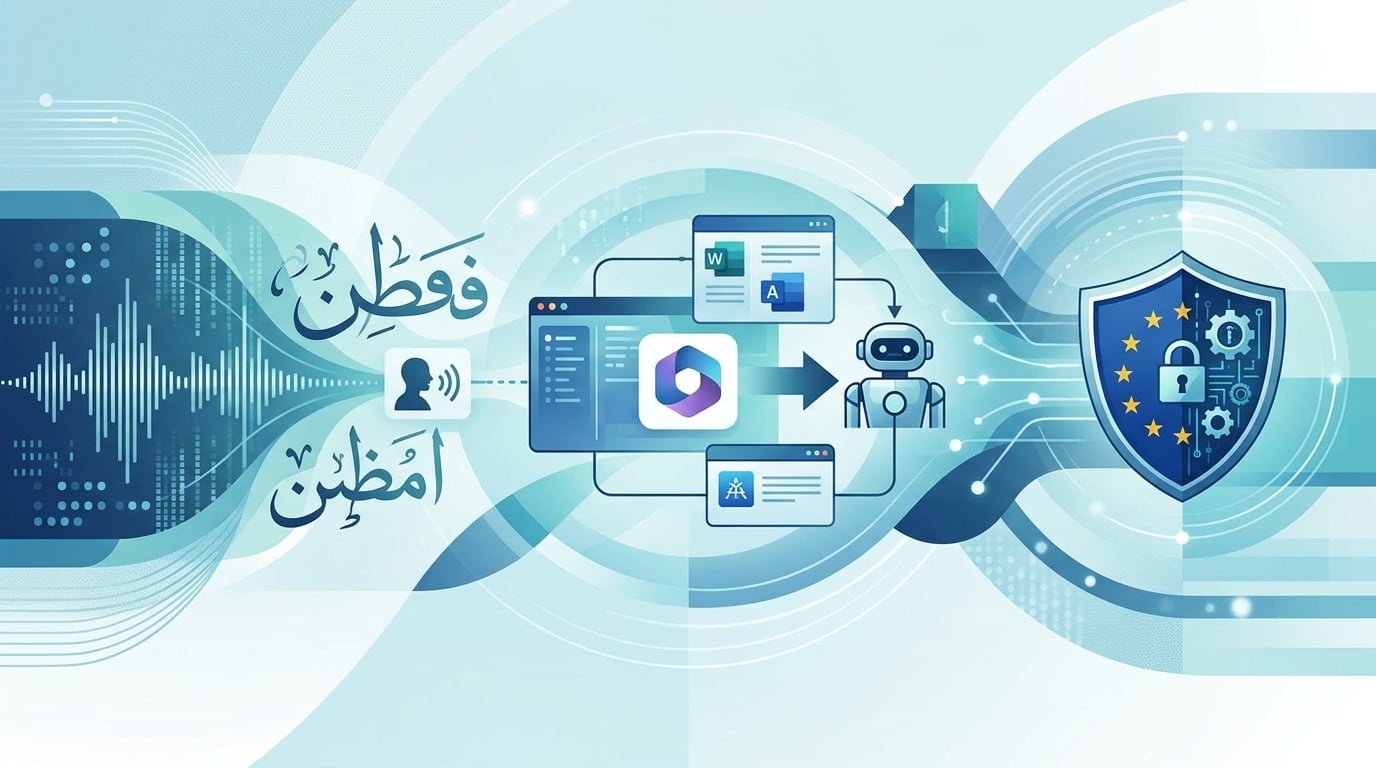
Western AICohere's open-source Arabic speech model outperforms Whisper on dialect fidelity while Anthropic turns Claude into an active Microsoft 365 agent — all as the European Commission unveils a sweeping AI-cybersecurity action plan.
Lukas HoffmannConsumer GPUs dominate the headlines, but dedicated AI inference accelerators — from the Hailo-8L to the NVIDIA Jetson AGX Thor — offer superior power efficiency, predictable latency, and purpose-built performance for edge and local deployment. Here is the spec-grounded, tier-by-tier breakdown of every accelerator worth buying in 2026.
Kaito TanakaA Reuters exclusive confirmed on July 7 that DeepSeek is designing a custom inference chip to be fabricated by SMIC — a move that would complete China's most ambitious attempt yet at a fully domestic AI stack, from model weights down to silicon. Here's what the development means for developers, Huawei, and the global AI hardware race.
Sophia Chen
Western AIFrom Anthropic's government-mandated suspension to OpenAI's audacious proposal to hand Washington a $42 billion equity stake, the Western AI industry is being reshaped by forces far beyond the benchmark leaderboard. The frontier is no longer just about who builds the best model — it's about who controls access to it.
Sarah BrennanChoosing the right consumer GPU for running LLMs locally in 2026 comes down to VRAM, memory bandwidth, and software ecosystem — and the gap between NVIDIA, AMD, and Intel has never been more interesting. Here is the value-first, spec-grounded breakdown of every card worth buying for Llama 3, Mistral, Qwen, and Gemma at home.
Diego RamosMoonshot AI's Kimi K3 — a 2.5-trillion-parameter multimodal giant — has arrived, but the real story is the systematic engineering revolution underneath it: Chinese labs are now training frontier models entirely on domestic chips, perfecting a 'Day 0' co-design philosophy that is quietly making the US export-control strategy obsolete.
Wei LianThe European Commission's Action Plan on Cybersecurity and Artificial Intelligence, unveiled on July 7, reclassifies frontier models as severe systemic risks to financial stability. With the ECB now demanding concrete action plans from major banks by October 31, the era of voluntary AI governance in Europe is definitively over.
Elena Vance
Western AIFrom OpenAI's tiered GPT-5.6 family and Anthropic's Project Glasswing to Mistral's sovereign infrastructure push and the EU AI Act's revised deadlines, the Western AI landscape is undergoing a structural shift — away from monolithic models and toward specialized agents, custom silicon, and geopolitically-aware deployment strategies.
Lukas HoffmannApple's unified memory architecture has quietly made the Mac mini M4 Pro and Mac Studio M4 Max two of the most compelling machines for running large language models locally — here is the spec-grounded breakdown of which one belongs on your desk.
Kaito TanakaA wave of new benchmark data and market analysis in early July 2026 confirms what many developers already knew: Chinese AI labs like Zhipu (GLM), DeepSeek, and Moonshot (Kimi) are offering near-frontier performance at a fraction of the cost. We break down the latest verified performance, pricing, and the practical implications of this massive ecosystem shift.
Sophia ChenGovernor Pritzker's signature on Senate Bill 315 makes Illinois the first state to mandate annual third-party safety audits for frontier AI companies. With civil penalties reaching **$3 million** per violation and a federal standards framework still weeks away, the patchwork of state-level AI regulation just became a very expensive reality for the labs.
Marcus Okafor
Western AIMeta AI formally enters the image synthesis arena with Muse Image while OpenAI rolls out specialized voice models and Anthropic inks a major data center deal — together revealing an industry pivoting from model demos to the unglamorous work of industrial-scale deployment.
Sarah BrennanRunning powerful language models locally is no longer a six-figure data center fantasy — in 2026, a well-chosen refurbished server can outperform cloud instances at a fraction of the long-term cost. Here's the value-first, workload-by-workload breakdown for home-lab builders, solo developers, and small teams.
Diego Ramos
Western AIFrom Anthropic's government-mandated safety classifier to OpenAI's tiered GPT-5.6 family and Microsoft's $2.5 billion forward-deployment unit, the Western AI landscape is being reshaped by geopolitics and enterprise realism in equal measure.
Lukas HoffmannAlibaba has ordered all employees to uninstall Anthropic's Claude Code by July 10, citing 'back-door security risks' — the latest escalation in a months-long confrontation over alleged industrial-scale model distillation by DeepSeek, Moonshot AI, and MiniMax. The episode exposes a new front in the US-China AI rivalry: not chips or benchmarks, but the software tools developers use every day.
Wei Lian